The Age of the Captive Moon belongs to the local universe of The Two Shores. It is not dated before or after the Age of Open Hands on a universal calendar.
The name describes an inhabited historical condition: communities on the moonward face maintain a relation that keeps the moon turned toward them. They interpret its presence as evidence of superiority. People on the other face live without seeing it and have forgotten how to fish.
The Fisherman’s Apprentice follows Arel, a young inhabitant of the moonless shore. His discovery of The Fisherman’s Notes leads through practical invention, hunger, affection, caste, and anger toward The Tree at the Center.
Read the book
The Fisherman’s Apprentice — Book contains the story in order. The Fisherman’s Apprentice Continuity distinguishes narrated events, established setting facts, and the Little Dream Merchant’s disputed claims.
The inhabited world
The Two Shores describes the two faces and their sea-connected transition. The Moonward Orders describes the heterogeneous societies of the other face. The Traveling Fire introduces the small company Arel joins.
The shared foundations of Causality, The Unowned Life, Wisdom, and Protocol remain relevant. No local authority, including the tree, owns the final explanation of those concepts.
Artistic register
The prose moves from a young person’s practical curiosity into an emotionally difficult encounter with power. It keeps tenderness, irritability, humor, work, and material consequence in the same world.
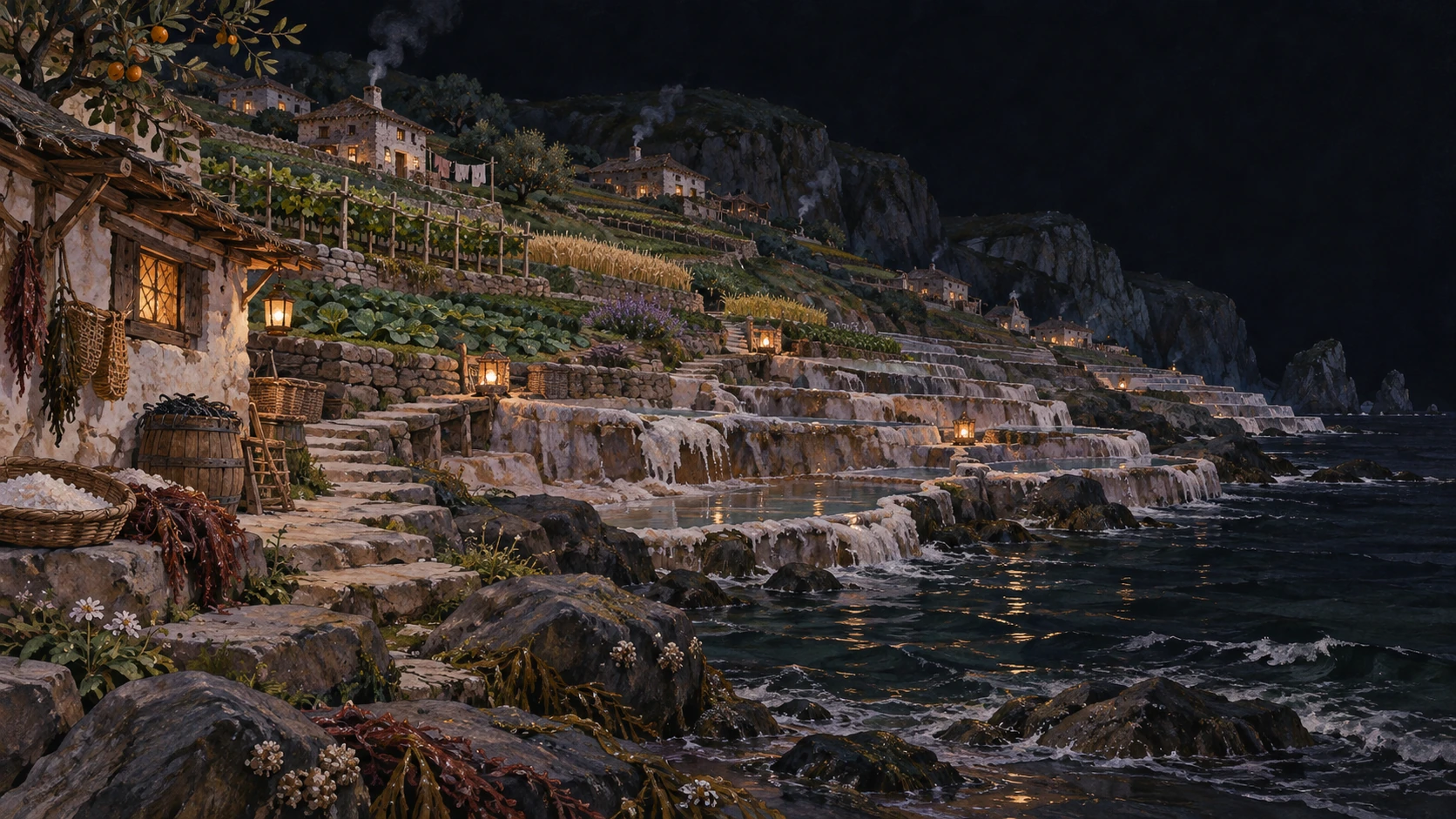
The author has requested light tonal affinities with The Little Black Fish, My Sweet Orange Tree, and its sequel known in Turkish as Deli Fişek. Characters, imagery, dialogue, and narrative construction remain original. These affinities do not import events or cosmology from those works.
Family and the first chapters
Nilo and Children of Brine Steps bring the wider story’s questions into Arel’s earliest relationships. 01 The Cabinet Facing the Wall and 02 Room for One More are written manuscript chapters, not issue-production outlines.
Active structure
The book now has twelve chapters: two written prose chapters and ten short summaries. The former twenty-chapter summary sequence is preserved as superseded material in the manuscript archive.
Arel’s unrecognized sea crossing and first question about the moon belong to Chapter 5; recognizing the two faces belongs to Chapter 7.