Moonward society is not one civilization or one faith. Great orders, hereditary castes, small friendships, traveling associations, and adventurous companies occupy the same face.
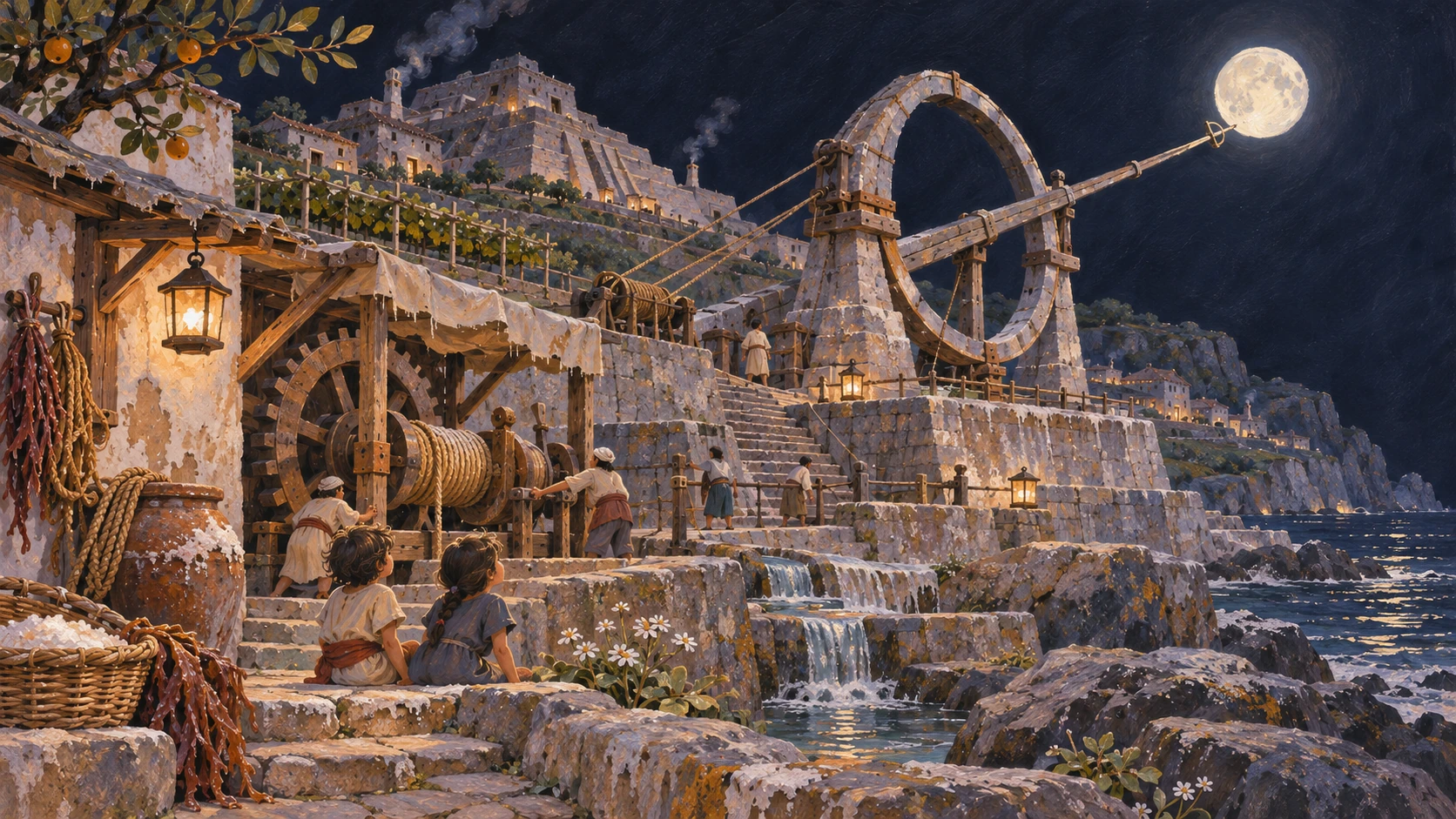
The largest cities build monumental pyramids through organized labor, engineered lifting systems, accumulated craft knowledge, and the work of people excluded from public credit. Pyramid construction is neither a miracle nor the proof of a superior species.
One influential institution, the Order of the Still Moon, controls parts of the inherited orientation infrastructure. Its ceremonial teaching describes the moon’s constant presence as recognition of worth. Workers maintain the machinery beneath that claim.
Caste affects work, residence, education, travel, and who can be named in a public record. There are exceptions and movements across boundaries, but exceptions can reinforce a hierarchy when advertised as proof that everyone has equal opportunity.
The taboo on sea travel and fishing is widely held and unevenly enforced. Travelers who violate other expectations may still reproduce the taboo. Small friendly groups can carry the same arrogance as a great order.
Moonward people remain capable of generosity, affection, doubt, humor, and courage. Arel encounters these qualities in people whose conduct he cannot excuse. Their goodness does not erase the structures that benefit them.
Related: The Traveling Fire, The Two Shores, The Fisherman’s Apprentice Continuity.