The tree occupies an interior region between the world’s inhabited faces. It participates in the maintenance and contact architecture of The Two Shores.
Its size becomes legible through routes, work surfaces, chambers, and signs of growth. Visitors do not acquire a complete view of it by reaching one root.
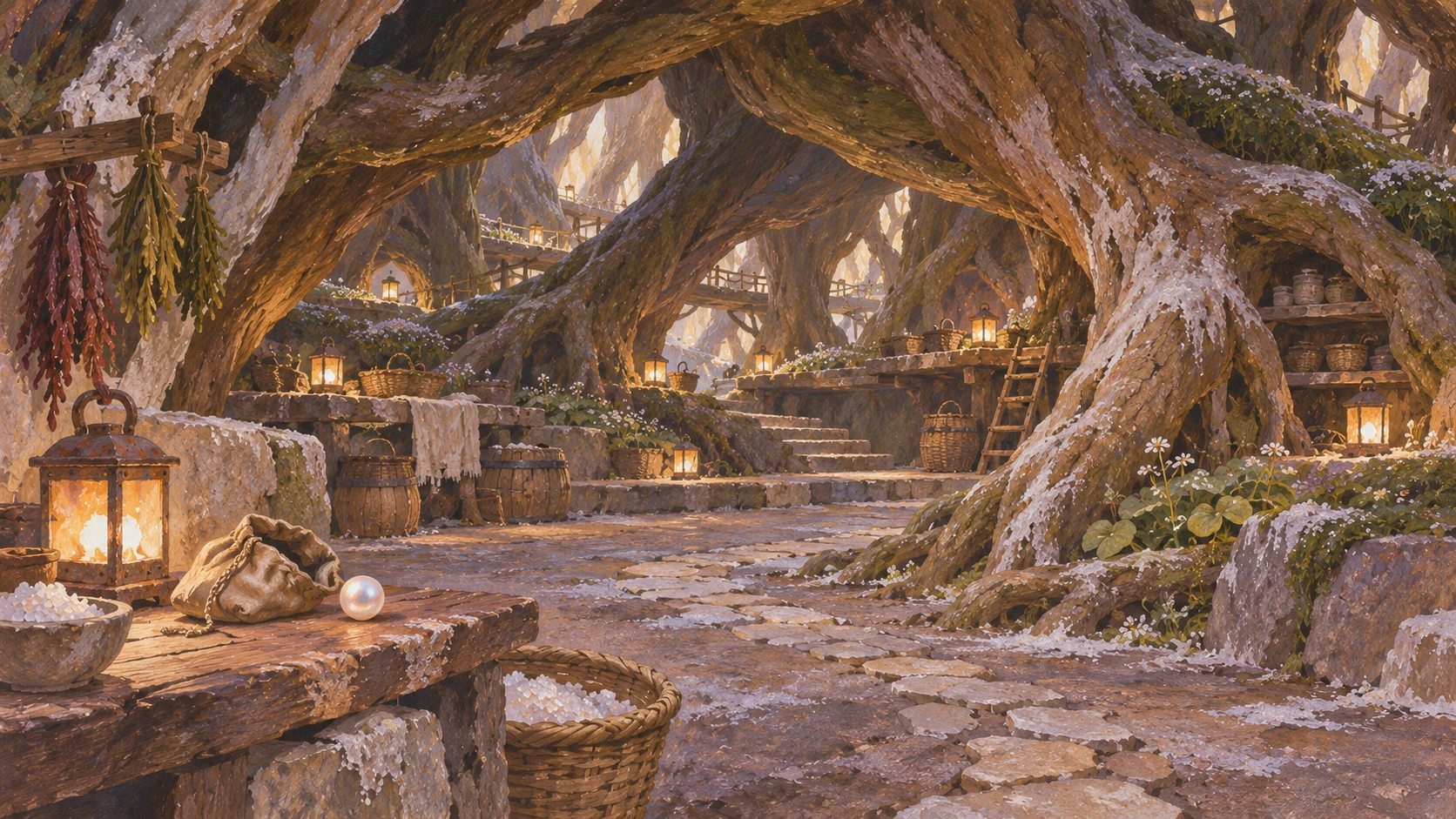
The Little Dream Merchant belongs to its distributed awareness. The tree is a powerful living participant in the universe, not an object containing every idea or an unquestionable voice of causality.
It can influence material conditions and provisionings in this local world. The full scope and cost of those interventions remain contested. The Merchant’s claim that it could end every war and every pain is not independently established.
The tree explains restraint through Protocol, Causality, and the danger of replacing the lives of others with the arrangement of a provider. Arel asks whether that account has turned respect for life into an excuse for watching people starve.
The encounter ends with Arel attacking the tree while crying and shouting his intention to destroy it. Hands emerge from darkness and remove him. The narrative establishes the removal but not the hands’ identity or the justice of their action.
Objects at the encounter
In the active twelve-chapter outline, Arel arrives with one pearl recovered during his dive. The pouch is not an unexplained substitute for that surviving object. He asks for a route home before the Merchant’s claims enlarge the argument.