Mend Lane is a short inhabited maintenance lane east of the shared square at The Hinge. Its western mouth meets the square’s eastern edge; its eastern end bends toward service passages, not directly into the docks. The name comes from a repair stitch in the paving that residents have continued across newer surfaces. No single maker planned the whole line.
Ilyra Venn and Nacre reach their rooms from this lane. Their established rooms, the kitchen’s position on the western landing, and Sava’s southern greenhouse retain the relationships in The Hinge Spatial Guide. The lane is a smaller place within that geography.
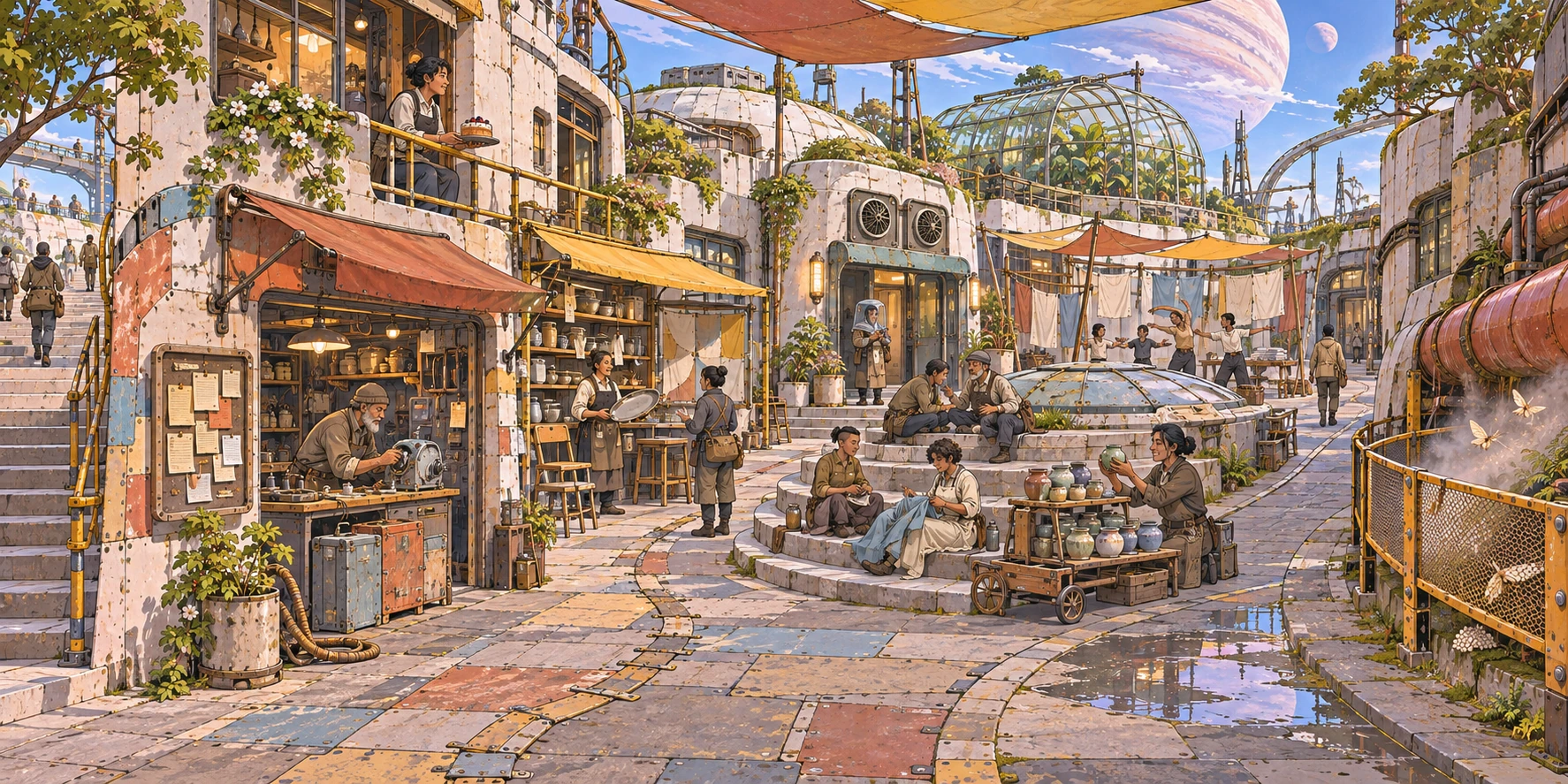
Six places
The Message Shop
A maintenance shop occupies the ground floor beneath Nacre’s rooms. Dema Rill repairs housings, latches, and domestic pressure fittings here. A recessed surface beside the entrance holds messages without keeping a record of readers. Some messages are private folds; others advertise spare parts, work, or a lost baking dish. Dema removes commercial notices that cover personal ones.
The shop has a low work surface, a standing bench, and clear turning space. Nacre’s access to their home does not require crossing an active work area. Dema owns the missing baking dish and suspects Teren.
The Borrowed Shelf
Across from the shop, Pell Varo keeps tools, serving vessels, and adaptable seats for short loans. Deposits can be money, repair work, or an agreed replacement; the terms are written before an object leaves. Pell’s celebrated generosity includes an irritating memory for which borrower returned something cleaner than it left.
A fabric test frame occupies the back wall. Pell hopes to sell a new line of festival canopies and has borrowed more shelf space than the enterprise can yet justify.
The Two-Air Room
Farther east on the lane’s north side, two independently ventilated rest chambers share a sheltered vestibule. They offer limited environmental accommodation, not safe conditions for every body. The posted limits are tactile as well as visible. Visitors needing other conditions must arrange a suitable habitat.
Oru Sen runs the room and lives above it. One chamber is currently hard for Oru to reach from the square because the intervening lane’s dry intervals injure their exposed respiratory folds. Their own portable hood buys time, not an entire working day. A promised atmospheric upgrade would change that.
The Cistern Steps
Opposite the rest room, broad shallow steps surround a covered service cistern. A level route runs beside them. People sit here to mend fabric, argue, exchange jars, or wait for someone to finish an argument. The cistern is opened only by its maintenance crew; it is not a public well.
Leth Arda sells small glazed vessels from a wheeled board here. Their glaze trials have become an unofficial seasonal calendar. A particularly ugly green is known as the week before Pell’s wedding, although Pell has never married.
The Quiet Elbow
At the lane’s eastern bend, a warm condensate return runs behind a removable guard. Seam moths gather in its humid eddies. Residents call it quiet because the old pump is less audible here; at the wrong hour, conversations from the cistern steps carry perfectly.
The guard keeps passersby off the hot pipe while leaving an inspection opening and a floor-level route clear. Eggs beneath its sheltered upper lip are easily mistaken for mineral grains. The space is maintained infrastructure and an inhabited niche.
The Awning Yard
A shallow recess on the south side, between the steps and the bend, holds communal washing frames and drying lines. It has enough room for a small rehearsal when laundry is brought in. Nothing authorizes organizers to remove other people’s washing.
The Evening of Borrowed Shade is assembled here. Its canopies extend only over agreed sections of the lane; they must not obstruct vents, warnings, or the route between the square and the Two-Air Room.
Eight neighbors
| Neighbor | Ordinary stake in the lane | Wants something from | Friction |
|---|---|---|---|
| Ilyra Venn | Repairs interfaces and rents two rooms | Dema’s measurements and Oru’s practical access requirements | Keeps taking work she should hand over |
| Nacre | Lives above the shop and makes elaborate desserts | Pell’s wide serving trays | Wants a celebration without being recruited as its solemn witness |
| Teren Ash | Lives at the western landing and regularly brings food here | Oru’s storage chamber during kitchen repairs | Resents being treated as the default unpaid caterer |
| Sava of the Ninth Graft | Lives between her greenhouse and a remote Garden; visits to inspect condensate life | Leth’s observations of the moths | Cannot promise that transplantation will work |
| Dema Rill | Lives behind the Message Shop | Ilyra’s sign-off on the new regulator | Has already committed paid labor to the installation |
| Pell Varo | Lives over the Borrowed Shelf | Nacre’s help testing serving heights | Has sold shade bookings before every anchor is approved |
| Oru Sen | Lives above and operates the Two-Air Room | A reliable route through the lane | Has been asked to wait through several previous improvements |
| Leth Arda | Rents a room off the Awning Yard | Dema’s permission to inspect the return | Wants their observations taken seriously without becoming an unpaid permanent caretaker |
The first four remain the established characters; the latter four have their own work and households. Teren and Sava are regular neighbors in the social sense, not newly relocated residents.
What happens next
The Evening of Borrowed Shade is approaching. A regulator replacement scheduled just before it would make the lane’s humidity steadier and allow Oru longer unassisted access. The same change would eliminate the condensation rhythm used by the moths.
A Street With Room for Air develops this situation as a proposed story. The fault, the habitat, and the residents are established here; no settlement or successful celebration has yet occurred.
The message surface already holds two notices: “Do not postpone the air work again” and “Look under the return guard before removing it.” Neither notice names the other as its enemy.