Objects carry traces of lives without containing those lives completely.
A vessel can survive its maker, change households, lose its name, and acquire another use. A repaired fastening can connect two histories that neither repairer fully knows.
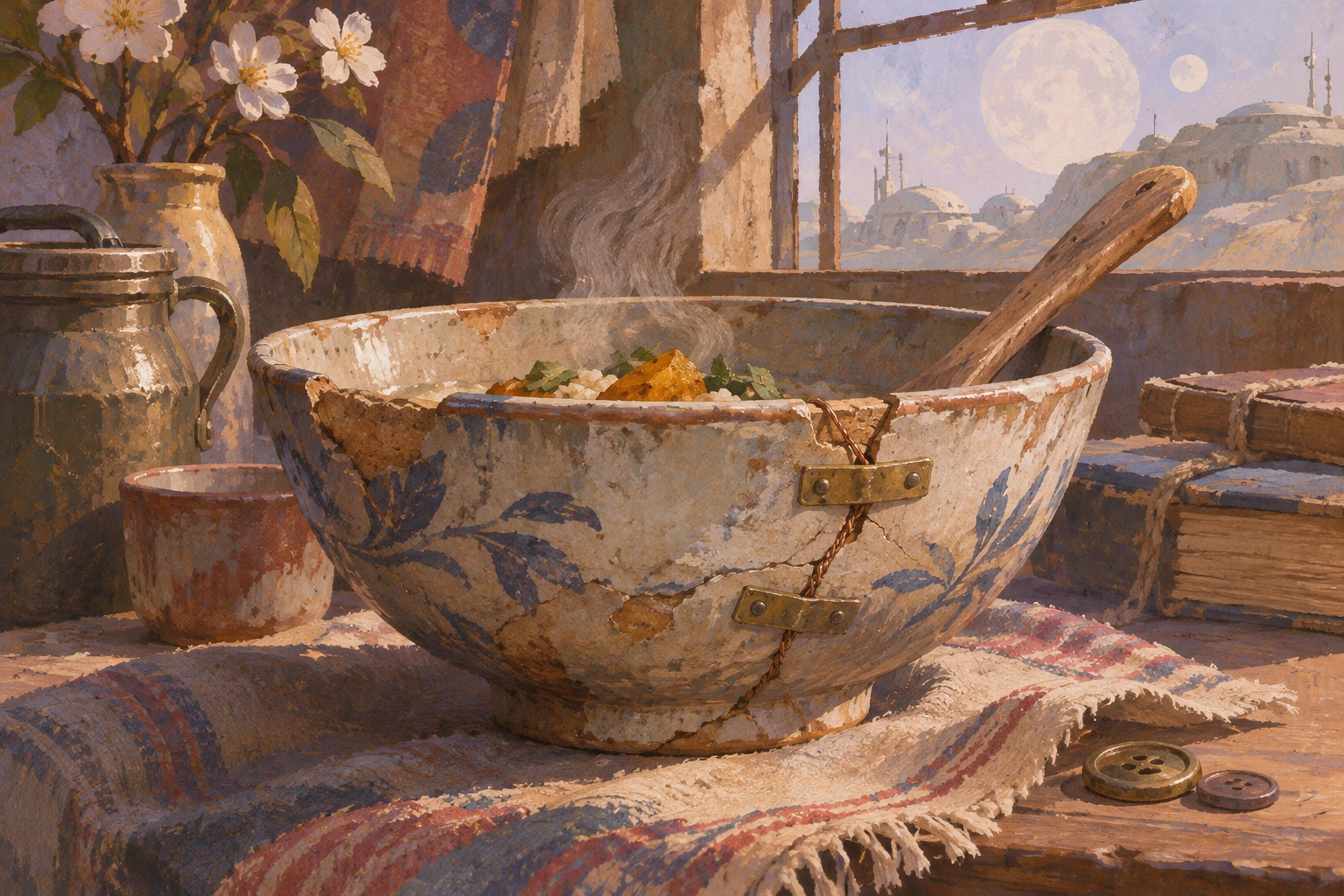
Touch and inference
Wear suggests repeated contact. It does not identify every hand. An inscription supplies one account, not necessarily an uncontested truth. A collector can mistake a practical modification for sacred symbolism.
Good storytelling lets an object remain material: weight, smell, balance, temperature, repair, and the difficulty of carrying it. Meaning can grow through these properties rather than through an explanatory label.
Inheritance
Receiving an object does not require preserving its original role forever. A child may use a ceremonial bowl for ordinary food. A survivor may discard a uniform and retain a button.
Those choices can cause grief or conflict without one side owning the correct relationship to memory.
Counterparts and replacement
A perfect-looking reproduction can be useful, moving, or disturbing. It does not automatically replace the history of use. A broken original can be beyond repair without making every replacement a betrayal.
Journeys
Objects move through trade, gifting, theft, salvage, and necessity. Their movement can reveal connections between communities more subtly than a political map.
One recurring kind of story follows a mundane object across several scales: the maker’s tool, the traveler’s keepsake, the child’s toy, the archive’s unexplained artifact. The same object is not the same experience at every stop.
Related: Memory and Continuity, Art Across Different Senses, The Unowned Life.
From household thing to question
A drawing can outlast the hope in which it was made. A tool can become an ornament after its use is forgotten. An unfinished household task can make a loss present without representing it through a monumental image.
Symbols and the Work Beneath Them follows the changing accounts attached to such things. Living Knowledge asks when a surviving object can re-enter practice.
Give recurring objects enough ordinary use that their later emotional weight has somewhere to settle.