Reçine Ana is a sentient tree in Resin Valley that bears winged, wasp-like young. The observed adult stands about six metres tall. Its ash-grey bark is furrowed lengthwise and the trunk forks unevenly. Oval, amber-rimmed nests open on its shaded face. Returning juveniles land first on the main horizontal limb.
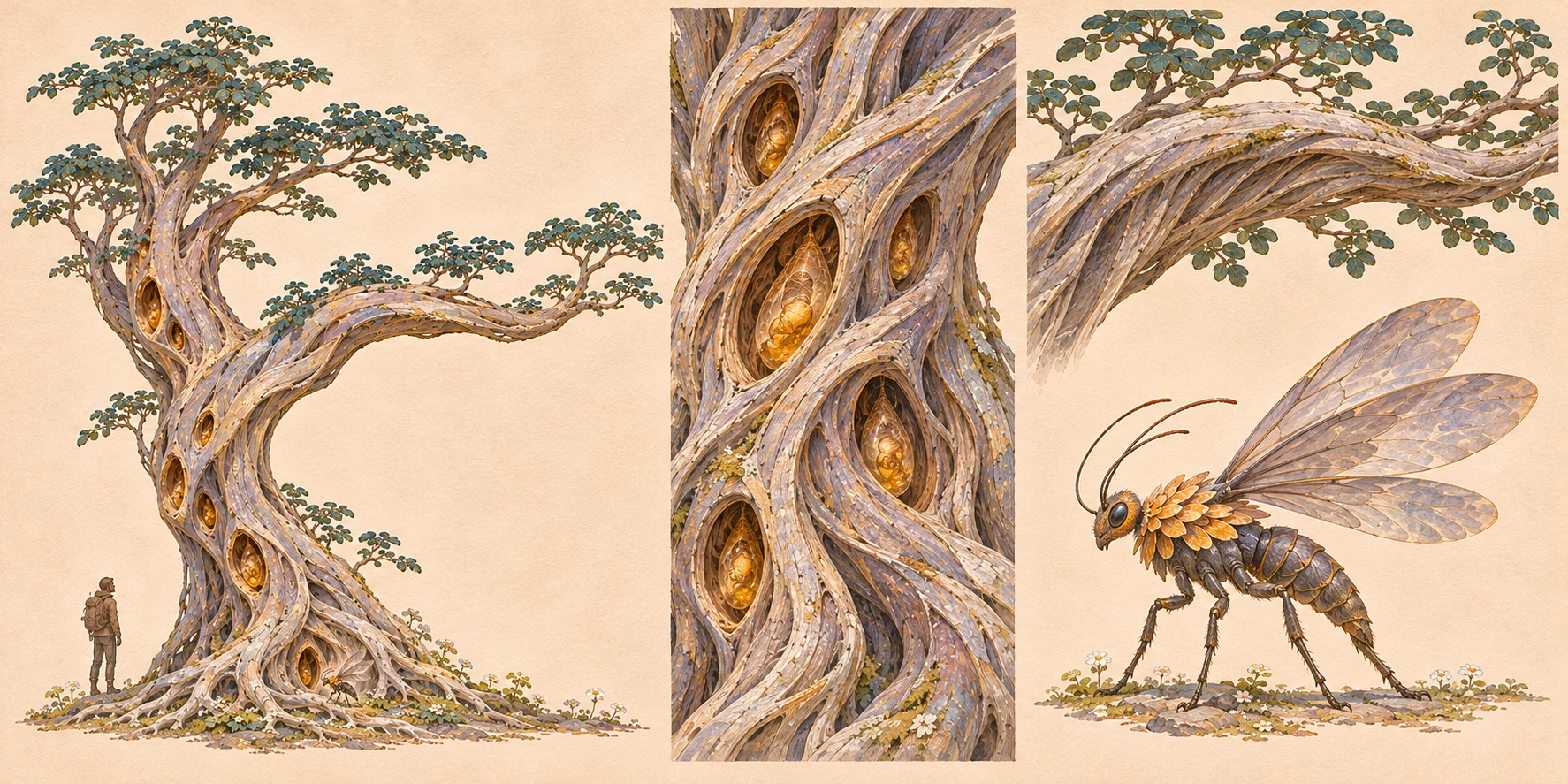
Cocoon and home
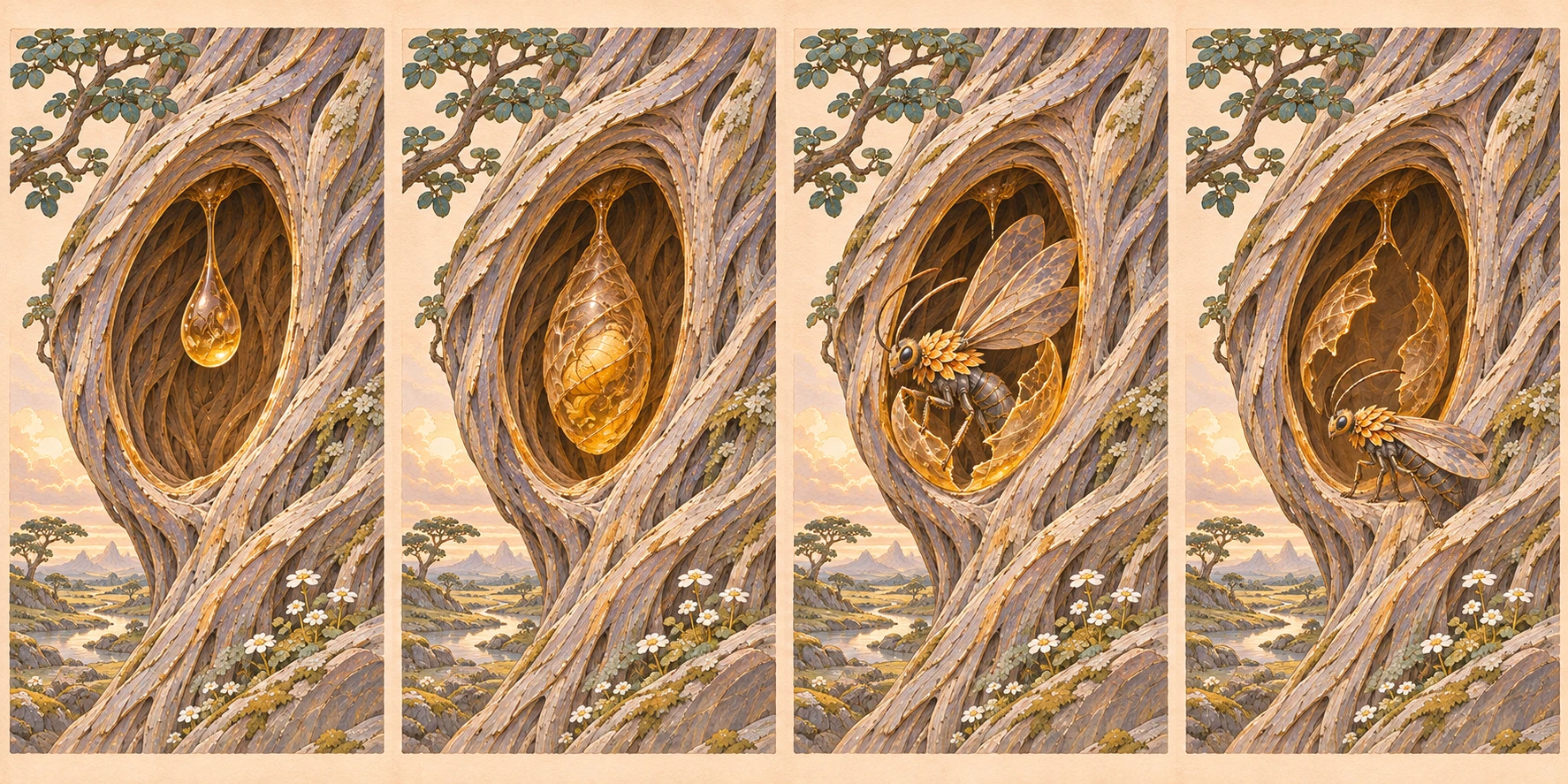
Resin seeps through an opening in the wall of a hollow and hangs there. The outer surface sets into a cocoon. A palm-sized juvenile emerges with a charcoal body, an amber collar, and two pairs of smoky membrane wings. On its first flight it makes a short circuit of the branch, then returns to its own hollow. Older young return to this trunk after feeding flights and spend the night in the hollows.
Sound through wood
A fibrous organ beneath the bark contracts and relaxes. It runs from the trunk into the horizontal branch, carrying vibrations into the wood. A perched juvenile feels them through its feet. Brief wingbeats travel back through its feet into the branch, where the tree senses them. The flexible lip of a hollow can retract and make the entrance wider.
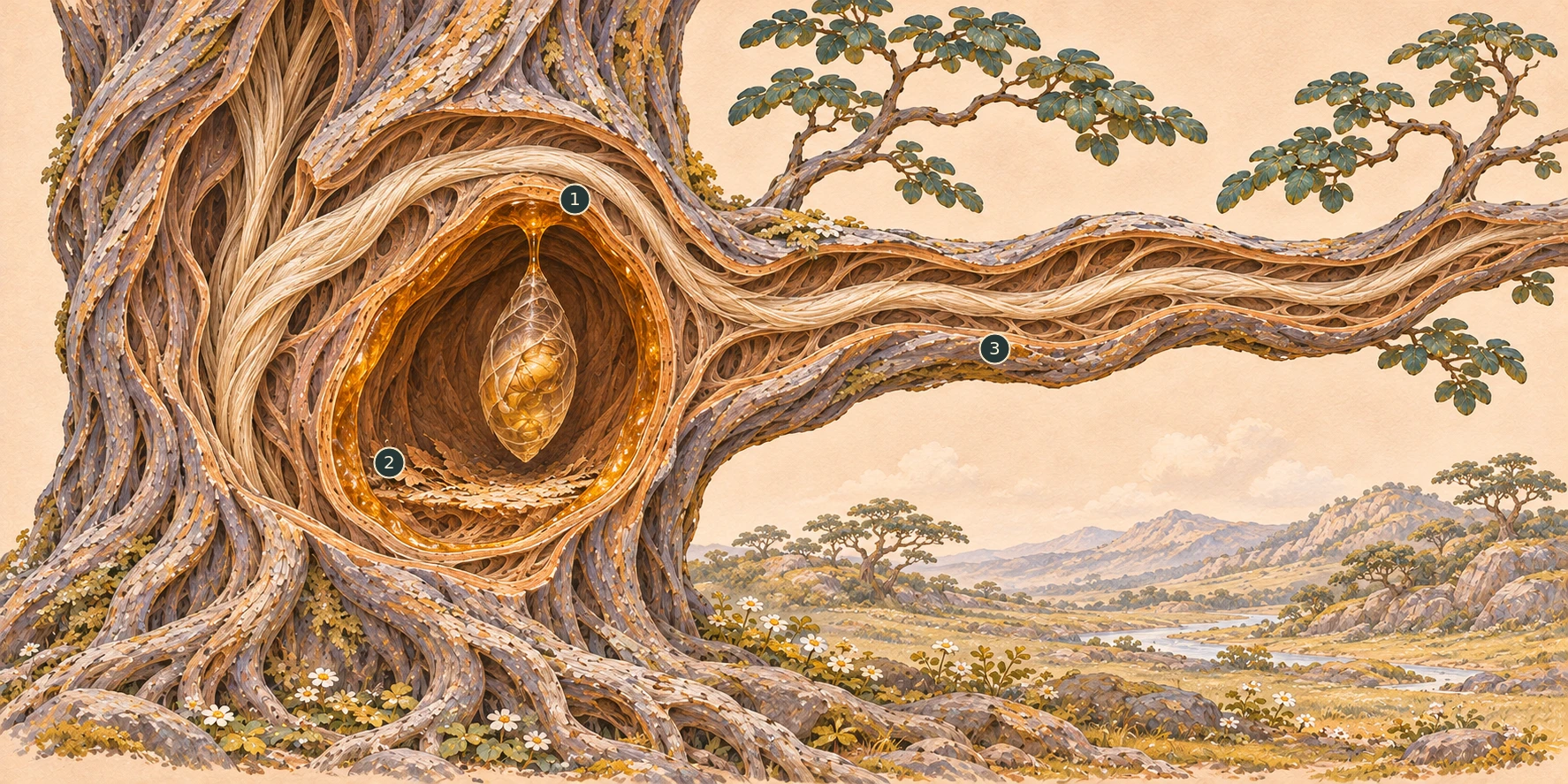
In the section, 1 marks the resin outlet, 2 the nest wall, and 3 the vibrating fibres that run along the limb.
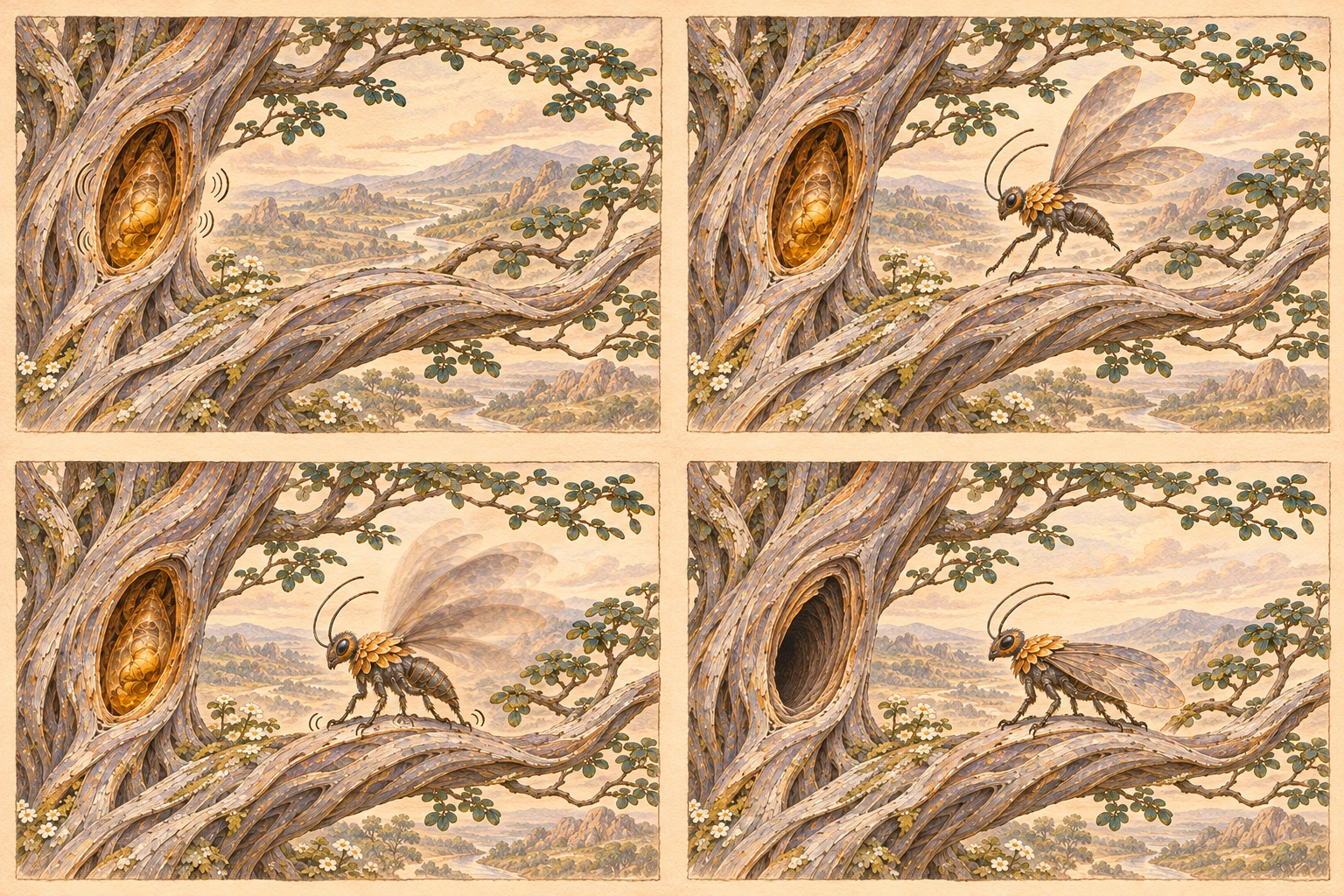
Two short beats are followed by a long one. The first field notes glossed the rhythm as “come home.” The return of the injured juvenile also supports “open a shelter.” Its uses in other encounters are still under study.
Open questions
The founding records credit the Aevren with the tree’s ability to bear young in resin. The first records of reciprocal rhythms are from the valley. How the next adult tree comes into being and whether the winged young can live permanently away from their mother remain open questions. Sis örtüsü and Kabuk gezgini change the conditions around the hollows over time.