The Thalen organize households around continuing relationships among changing bodies. A person can inhabit several bodies with intermittent synchronization, or remain in one body for a finite lifetime. Their society includes both choices, uneasily.
What a life is for
Many Thalen seek to remain available to the people and work they have loved through transformations that would otherwise separate them. Their longevity allows apprenticeships spanning the histories of entire settlements. Their craft concerns how someone can change without being forced to relinquish every earlier bond.
They build continuity vessels, voluntary memory exchanges, and hospices for people withdrawing from distributed life. They also maintain witnesses to commitments made by individuals whose later selves remember those commitments differently.
Living and working
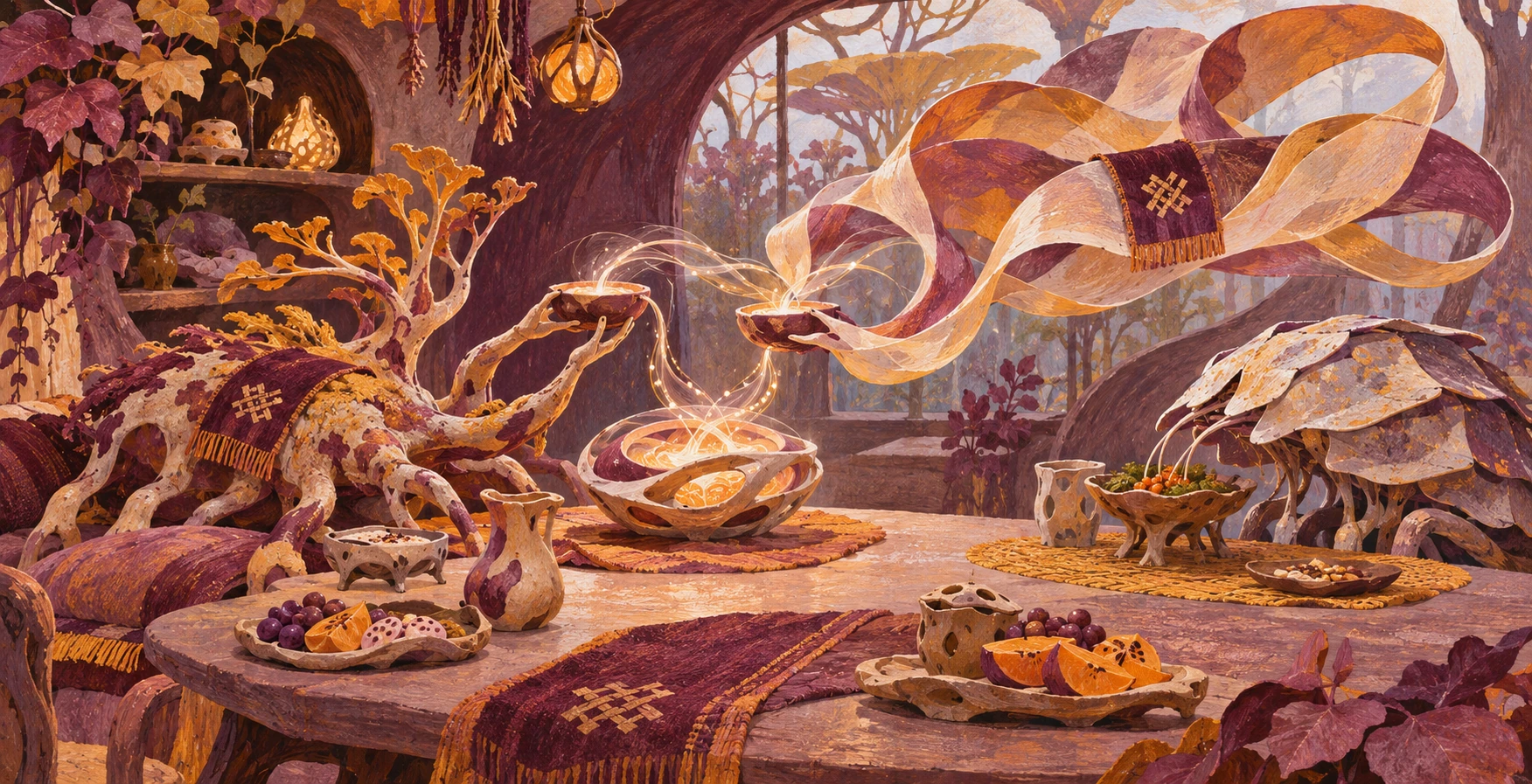
A household’s breakfast can include one member in several bodies, one body speaking for a consenting distant partner, and someone who has declined synchronization for years. Etiquette requires participants to identify which experiences they actually share. Familiarity can otherwise conceal a profound separation.
Thalen art often places versions of a work made by the same person centuries apart in conversation. A later artist may hate the earlier work and refuse to explain why. Some audiences find the refusal more upsetting than the work itself.
Their cities contain private memory rooms, communal embodiment pools, and quiet streets where no public synchronization occurs. Skilled integration workers help people digest experiences that arrive faster than they can emotionally accommodate.
Their disagreement
The Keepers of Relation believe continuity should carry substantial obligations to earlier promises. The Fresh Branches insist that a divergent person may need to leave those promises behind. Most cases concern particular partners, children, or debts rather than abstract definitions.
Long life has produced entrenched councils whose members remember founding agreements firsthand. Younger Thalen ask why eyewitness status should grant indefinite authority. Others choose finite lives; their relatives sometimes treat that choice as abandonment.
Their strongest blind spot is the belief that sufficient remembrance will preserve a relationship. Remembering every word of a conversation does not make it possible to forgive it.
Ossari depend on Thalen records but resist their claim that a habitat’s past should remain permanently accessible. Iriath crews employ continuity vessels and regularly return with branches that no longer want reunion. The Namar employ Thalen witnesses while refusing to let them decide everyone’s identity disputes.
Sael-in-Three shares a name across three bodies. One has returned from a long voyage and wants to become a separate person. The two at home disagree about whether the farewell has already happened.