The Aevren are linked construction cultures whose institutions gather around universe looms. Their ancestors learned to realize universes long before the Confluence opened. They have no reliable account of how far that history extends beyond surviving records.
What a life is for
Many Aevren consider a good life one that leaves room for something unforeseen to exist. A celebrated builder produces conditions whose inhabitants eventually do things the builder cannot understand. This ideal competes with patrons who demand a universe visibly expressing their own conception of beauty.
Their projects include ecologies sustained by unfamiliar physical relations, independent contact instruments, and habitats in which different bodies can collaborate. Research apprentices first maintain an existing inhabited environment; some resent spending decades on repairs before receiving permission to initiate anything new.
Living and working
An Aevren household can span workshops in several universes. Its members need not share a bodily form. Children learn model building through small environments without conscious inhabitants. The distinction is scientifically disputed at the margins, so some schools refuse the practice altogether.
Construction festivals display an instrument’s failures beside its successes. Wealthy workshops sometimes exhibit harmless failures while suppressing inhabited disasters. Public testimony by residents of created worlds is consequently more valued than a maker’s demonstration.
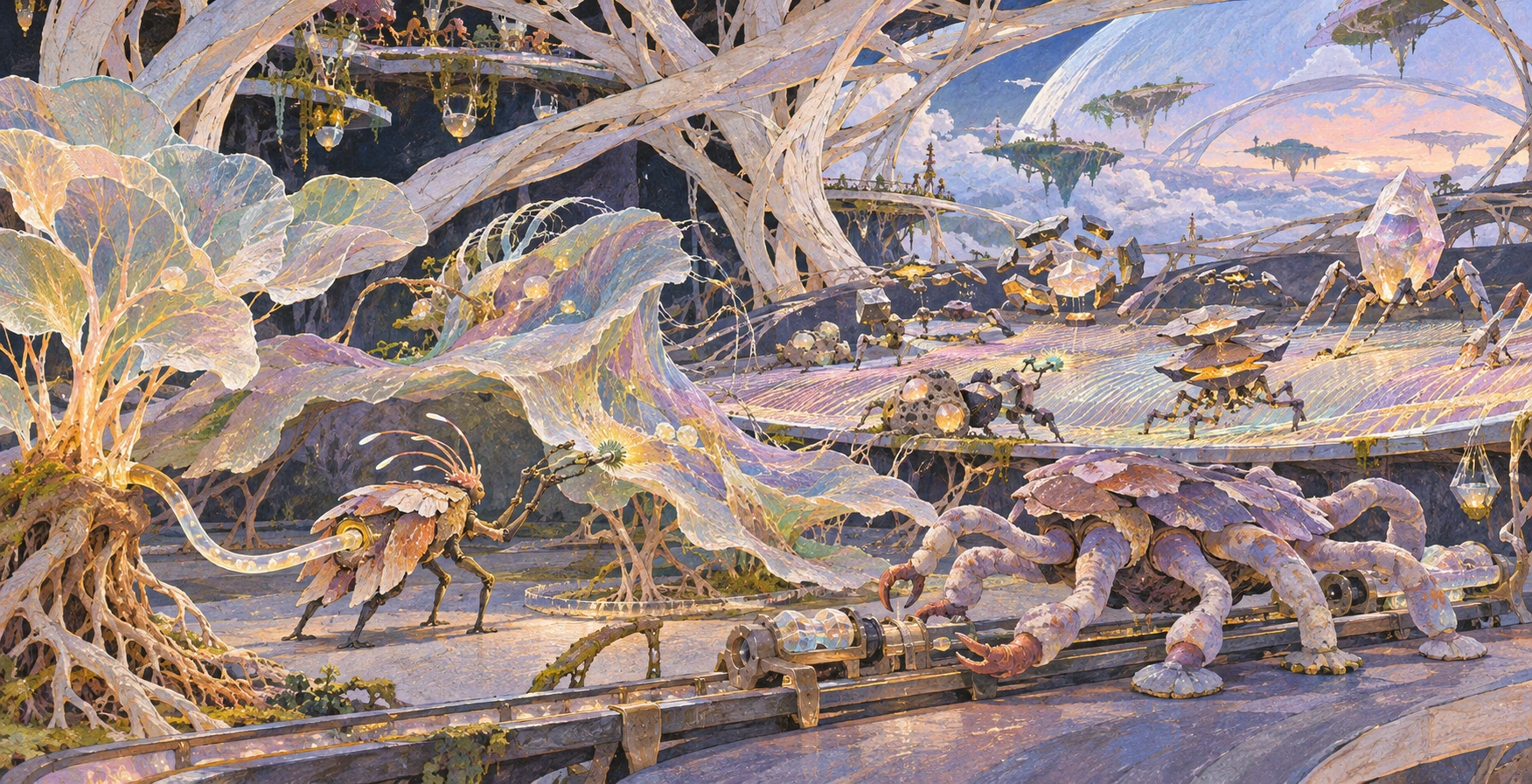
The characteristic city hangs along braided supports around a loom’s dark working volume. Small rooms, meals, and gardens occupy the accessible surfaces. Some residents never participate in construction and dislike being addressed as universe makers merely because they live there.
Their disagreement
The Release Workshops favor giving inhabited worlds independent instruments and ending unilateral external control. The Long Stewardships argue that withdrawing support can abandon lives created under dependent conditions. Neither position eliminates the actual work of negotiating with inhabitants who disagree among themselves.
Their strongest blind spot is authorship. Even generous Aevren can expect a world to retain evidence of who began it. An inhabitant who erases a maker’s monument may encounter anger that the maker never recognized in themselves.
They depend on Ossari habitat expertise and Namar passage maintenance. They admire Iriath discoveries but resent requests to open unstable prototypes. Thalen witnesses preserve their design histories and sometimes expose discrepancies that builders would prefer forgotten.
Esha Vaur, an interface engineer, has spent much of her working life preparing her most successful universe to stop needing her. When its inhabitants request a change she cannot safely simulate, she begins delaying her replies.