A habitat is an ongoing relationship among living bodies, materials, conditions, and maintenance. A beautifully realized environment can remain inaccessible to a visitor.
Different organisms require different pressures, temperatures, chemical conditions, rhythms, and resting places. Shared ethical value does not imply shared environmental needs.
Interfaces
Contact settlements build separated zones, exchange surfaces, and translation systems. A meeting can occur across a wall without being emotionally remote. A corridor that permits one body’s movement may obstruct another.
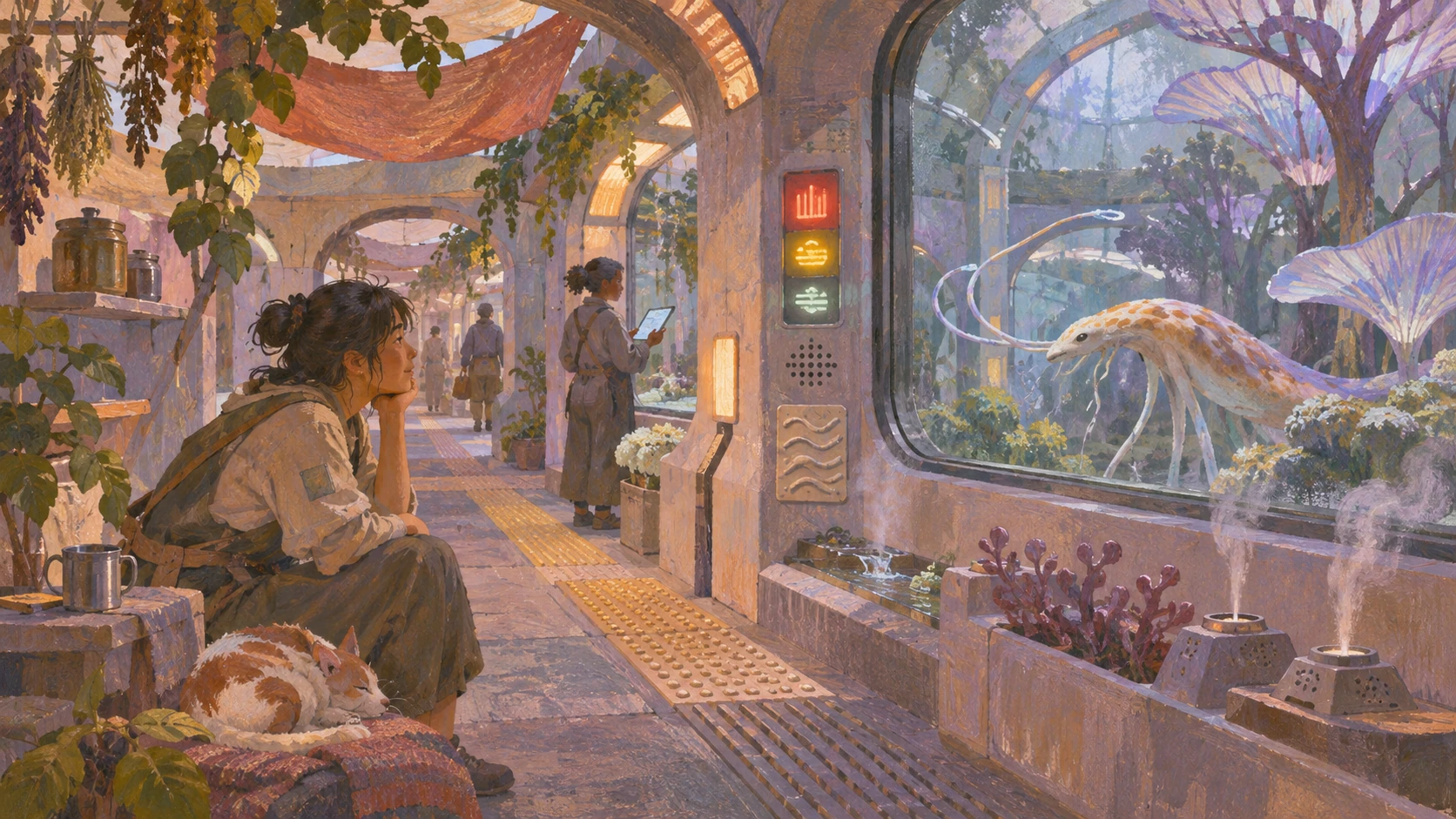
Warning systems combine channels where possible. Color, text, scent, texture, vibration, and gesture each have limits. An unfamiliar organism may not perceive a warning intended for a familiar one.
Designed habitats
A creator can establish initial conditions without predicting every later development. Organisms alter their environments, acquire preferences, and become entangled with others. A habitat’s original purpose can cease to describe its inhabited life.
Aftercare includes learning those changes. The desire to preserve a design cannot automatically override the lives that have developed within it.
Conflict without a villain
Two valued organisms can have mutually destructive requirements. Care may require distance, mediated contact, or a choice that leaves someone grieving. Wisdom does not guarantee that every conflict has a painless solution.
Local stories must establish the relevant conditions. “Alien” is not a sufficient explanation for any convenient barrier, and advanced technology is not an unlimited exemption from consequences.
Related: The Work of Care, Threshold, The Littoral Between Worlds.